
Sectional Sofa Buying Guide: Finding the Perfect Layout, Frame, and Fabric for Your Living Space

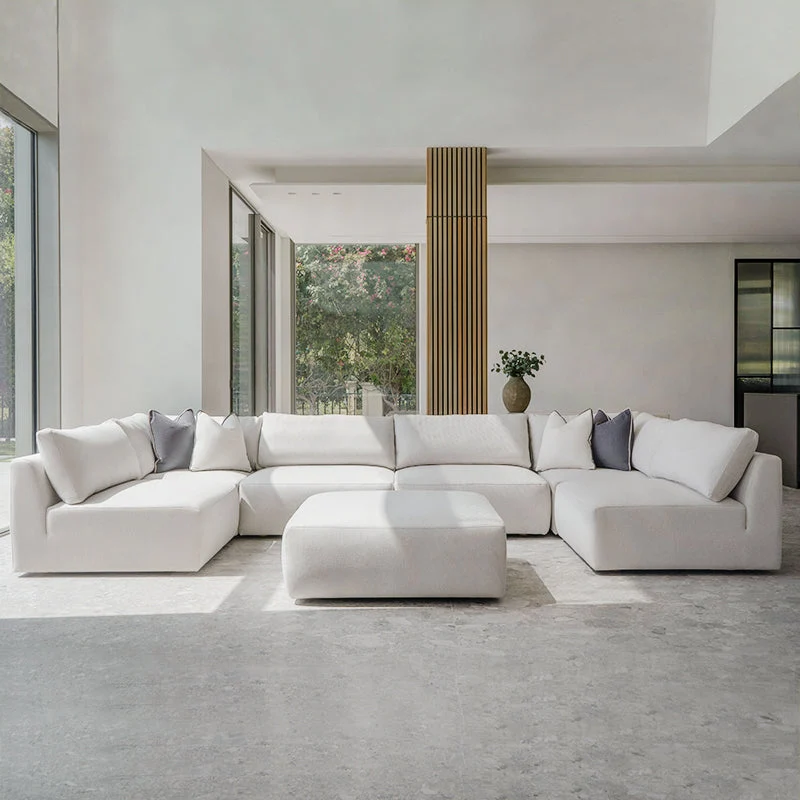
Choosing the right sectional sofa requires a balance between architectural proportions, daily functionality, and personal aesthetic. Unlike a traditional three-seater couch, a sectional commands a substantial footprint and alters how movement flows through a room. When selected with precision, a sectional transforms an ordinary seating arrangement into a cohesive hub for relaxation, family gatherings, and entertaining.
This guide breaks down every step of the decision-making process, from measuring spatial tolerances to evaluating frame joinery and selecting optimal room configurations.
Common Sectional Configurations and Shapes
Understanding the primary sectional silhouettes helps narrow down choices based on room geometry and household needs.
L-Shaped Sectionals
The L-shaped sectional consists of two perpendicular seating lines meeting at a corner angle. This shape works well when fitted into a room corner or placed in the center of an open floor plan to establish a clear boundary between living and dining zones. L-shaped models typically come as two-piece units comprising a standard sofa fused with a stationary chaise or an adjacent two-seater couch.
U-Shaped Sectionals
Designed for maximum capacity, U-shaped sectionals feature a central sofa section flanked by two forward-facing arms or chaises. This configuration fosters conversational seating by facing occupants toward one another. Because of its expansive depth, a U-shaped layout requires a generous room footprint to prevent the space from feeling overcrowded.
Modular Sectionals
Modular systems consist of individual, moveable seats, ottomans, and corner pieces that connect using hidden locking brackets. They offer versatility for homeowners who move frequently or enjoy reconfiguring their layout. You can start with a modest three-piece setup and purchase additional armless or corner units as your living space expands.
Chaise Sectionals
A chaise sectional combines a conventional sofa frame with a extended lounger module on one end. It delivers the relaxing legroom of an ottoman without occupying extra floor area in front of the middle seats. This setup offers high functional value for smaller living rooms where a full L-shape would block walkways.
Curved Sectionals
Curved sectionals introduce smooth, organic lines into rooms characterized by sharp architectural angles. Rather than forming precise 90-degree corners, these sofas sweep gently outward. While visually striking, curved units cannot sit flush against flat walls and require ample perimeter space to look intentional.
How to Measure Your Room for a Sectional
Inaccurate spatial planning is the leading cause of sectional returns. Before committing to a purchase, take detailed measurements using a tape measure and painter tape.
-
Map the Outer Footprint: Use blue painter tape to outline the exact length, width, and depth of the proposed sectional directly on your floor. Leave the tape in place for a few days to visualize how much floor real estate the piece absorbs.
-
Maintain Traffic Lanes: Allow at least 30 to 36 inches of clearance between the edges of the sectional and surrounding walls, coffee tables, or entertainment centers. Main pathways through the room should ideally maintain a 48-inch clearance.
-
Account for Table Placement: Ensure you leave 14 to 18 inches of breathing room between the front edge of the seat cushions and the coffee table. This gap allows comfortable legroom while keeping drinks within easy reach.
-
Measure Entry Points: Measure all exterior doorways, interior hallways, stairwells, and elevator doors through which the sectional pieces must pass during delivery. Check diagonal depth and height to prevent delivery delays.
Deciding Between Left-Facing and Right-Facing Layouts
Sectionals are categorized by their orientation from the perspective of someone standing directly in front of the piece, looking at it.
-
Left-Arm Facing (LAF): When standing in front of the sectional and facing the unit, the extended arm or chaise section sits on your left side.
-
Right-Arm Facing (RAF): When standing in front of the sectional and facing the unit, the extended arm or chaise section sits on your right side.
Selecting the incorrect orientation can block natural architectural pathways, obstruct sightlines to windows, or create awkward dead zones near doorways. If you anticipate changing your room layout in the future, consider a reversible chaise sectional, where the lounger cushion and base ottoman can swap sides.
Strategic Layouts for Different Living Environments
The arrangement of your sectional should reflect the primary architectural purpose of the room.
Open-Concept Living Rooms
In large open floor plans, a sectional acts as a structural divider. Position the main back cushions to face away from the kitchen or dining area, creating an enclosed living room zone without building permanent walls. Adding a sofa table directly behind the back cushions softens the visual transition and provides a surface for lamps and decor.
Small or Narrow Spaces
For compact floor plans, push an L-shaped or chaise sectional into a corner to maximize open floor space in the center of the room. Choose low-profile arms and raised legs that elevate the base off the floor. Exposing the floor underneath creates an optical illusion of greater space.
Focal Point Alignment
In media-focused rooms, orient the primary seating side directly toward the television or fireplace. Avoid placing high-back sectionals directly in front of large windows where they might block natural daylight, unless the sofa back sits lower than the window sill.
Materials, Frames, and Construction Quality
A sectional represents a significant financial investment, and its longevity depends heavily on structural craftsmanship.
Frame Materials
Look for frames constructed from kiln-dried hardwood such as oak, maple, or beech. The kiln-drying process removes moisture content from the wood, preventing warping, bowing, and cracking over time. Avoid frames made primarily from softwood, particleboard, or low-density plywood, as these materials yield under weight over time.
Joinery
Quality frame construction utilizes double-doweled joints reinforced with corner blocks that are glued and screwed into place. Steer clear of frames assembled solely with staples, nails, or light adhesive.
Cushion Supports and Suspension
The internal suspension system distributes weight and prevents sagging.
-
Eight-Way Hand-Tied Springs: Considered the gold standard in traditional upholstery, this system uses coil springs tied together in eight directions with high-grade twine to provide balanced support.
-
Sinuous Spring Systems: The most common high-quality alternative features S-shaped steel wire springs stretched horizontally across the frame. Sinuous systems offer durable support for modern, low-profile frames.
Cushion Filling Options
Cushion cores determine both comfort and maintenance needs. High-resiliency foam wrapped in a layer of polyester fiber or down feather offers a blend of structural resilience and softness. All-down or feather-filled cushions provide maximum plushness but require daily fluffing to maintain their shape.
Fabric and Leather Options
Choose upholstery based on your household dynamic:
-
Performance Fabrics: Treated synthetic weaves resist staining, moisture, and abrasion, making them ideal for homes with pets or children.
-
Top-Grain Leather: Highly durable and easy to wipe clean, leather develops a soft patina over time and holds up exceptionally well against daily wear.
-
Velvet and Textured Weaves: Linen blends and bouclé offer rich tactile interest, though they require more careful spot cleaning and maintenance.
Common Pitfalls to Avoid
-
Ignoring Scale and Proportions: A large sectional can overwhelm a small room, while a low-slung, delicate piece gets lost in high-ceiling environments. Match the scale of your furniture to the room architecture.
-
Forgetting About Delivery Access: Buying a piece that fits the living room but cannot fit through a tight stairwell corner or standard 32-inch door frame leads to frustration on delivery day.
-
Prioritizing Aesthetics Over Ergonomics: Deep seat depths may look sleek, but they can prove uncomfortable for shorter family members whose feet cannot touch the floor while sitting back.
Frequently Asked Questions
How do I keep sectional pieces from sliding apart on hardwood floors?
Most modern sectionals come equipped with pre-installed alligator clips or drop-and-hook bracket systems underneath the frame that lock individual modules together. If your sectional lacks built-in connectors, you can install aftermarket metal sectional brackets to the bottom of the wood frames or place heavy-duty rubber grip pads under each sofa leg to prevent movement on smooth flooring surfaces.
What is the average seat depth for a comfortable sectional?
Standard seat depth for a sectional ranges between 21 and 23 inches, which suits most upright sitting preferences. Deep sectionals measure between 24 and 28 inches from the front cushion edge to the back cushion. Deep seating allows occupants to lounge, curl up, or sit cross-legged, though it may require accent pillows for lower back support if you prefer an upright posture.
Is an L-shaped or U-shaped sectional better for entertaining?
U-shaped sectionals are better suited for hosting larger groups because the opposing seats face inward toward each other, facilitating natural face-to-face conversation. However, L-shaped sectionals offer greater flexibility in smaller spaces and allow guest flow across one entirely open side.
How do I choose the right coffee table size and shape for a sectional?
Select a coffee table that measures roughly two-thirds the length of the main sofa section. Round or oval coffee tables work exceptionally well with L-shaped and U-shaped sectionals because they eliminate sharp corners, making it easier for people to navigate in and out of the seating area. Maintain 14 to 18 inches of space between the table and seat cushions.
Can a sectional sofa work well in a small living room?
Yes, a sectional can work well in a small room because it consolidates seating into a single cohesive footprint, eliminating the need for separate love seats and accent chairs that break up floor space. Choose a two-piece chaise sectional with slim track arms, exposed legs, and a neutral fabric to keep the space looking open.
How often should I rotate and flip sectional cushions?
Rotate and flip unattached seat and back cushions every two to three weeks to distribute weight wear evenly and prolong foam integrity. For high-traffic seating areas on the sectional, swapping the position of cushions from heavily used end seats to lesser-used center seats helps prevent uneven sagging over time.
What is the typical lifespan of a high-quality sectional sofa?
A well-constructed sectional built with a kiln-dried hardwood frame, high-resiliency foam, and durable upholstery generally lasts between 7 and 15 years with regular maintenance. Premium frames with eight-way hand-tied springs can easily last decades and be reupholstered as interior design trends evolve.

Comments are closed.