

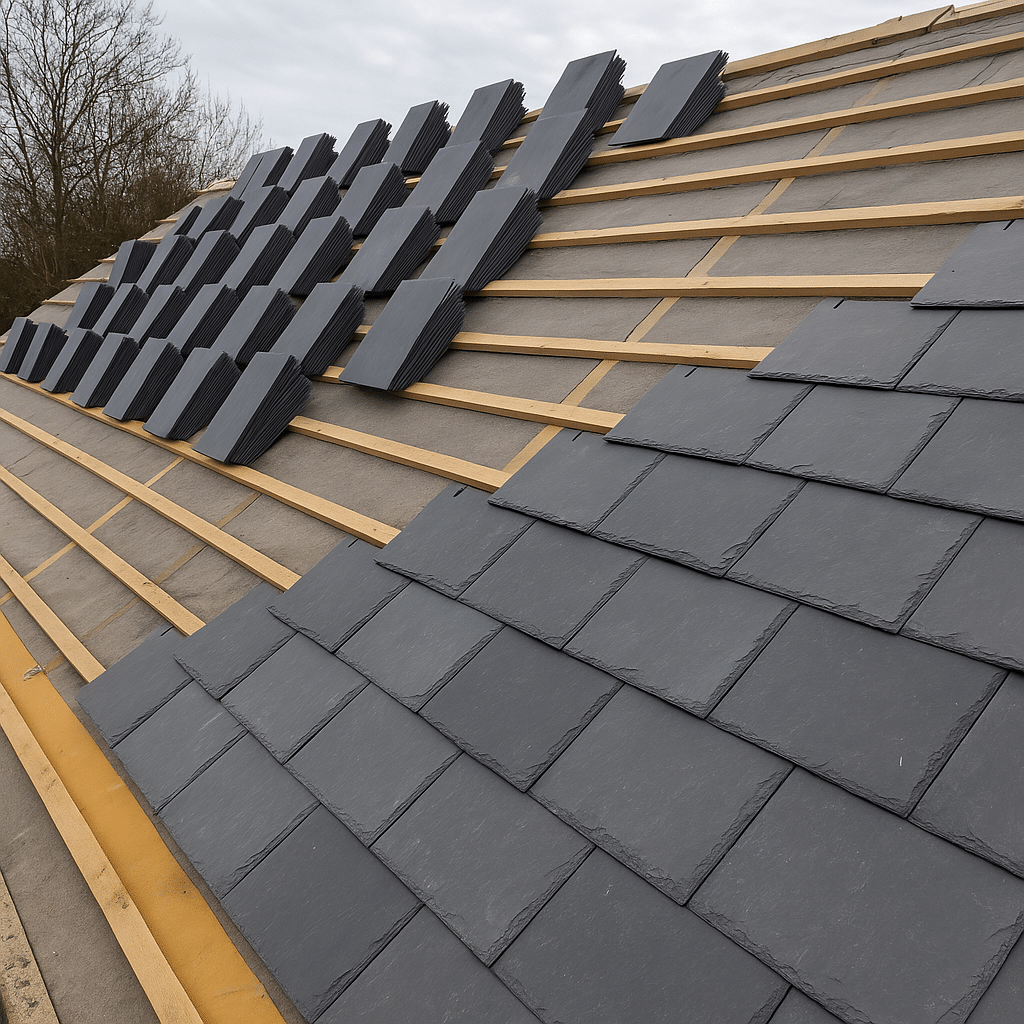
Selecting a roofing material for a home is one of the most significant financial decisions a homeowner will make. Among the various premium options available, natural slate roofing remains a gold standard for luxury residential design, historical restoration, and high-end construction. Derived from metamorphic rock formed millions of years ago, natural slate offers distinct aesthetic qualities, exceptional fire resistance, and unmatched durability.
However, slate is not a universal solution for every property. Its immense weight, high upfront investment, and technical installation requirements present challenges that require careful evaluation. This guide explores the advantages, disadvantages, material grades, costs, and key considerations of slate roofing to help you make an informed decision for your home.
Understanding Natural Slate Roofing
Natural slate is a fine-grained, foliated metamorphic rock created through the tectonic compression of clay, shale, and volcanic ash under intense heat and pressure. Because slate naturally splits along flat planes, quarry workers can cleave large blocks into smooth, uniform tiles known as slate shingles.
The performance and longevity of slate depend heavily on its origin and grade. Slate Quarries in regions such as Vermont, Pennsylvania, Virginia, and parts of Europe yield stone with varying mineral compositions, densities, and water absorption rates.
The American Society for Testing and Materials classifies roofing slate into three distinct quality grades based on expected service life:
-
S1 Grade Slate: The highest commercial quality available. S1 slate features a water absorption rate under 0.25 percent and offers an anticipated lifespan exceeding 75 to 100 years, often lasting well beyond a century with proper installation.
-
S2 Grade Slate: A mid-tier quality stone with slightly higher water absorption rates. S2 slate provides a reliable service life ranging between 40 and 75 years under normal climate conditions.
-
S3 Grade Slate: A lower density slate with higher porosity. S3 slate generally delivers a service life of 20 to 40 years and is more susceptible to frost wedging in cold climates.
Slate is also categorized as either hard slate or soft slate based on physical density and mineral structure:
-
Hard Slate: Exceptionally dense, non-porous rock that retains its structural integrity and color over generations. Hard slate does not soften or absorb moisture readily, making it ideal for harsh climates.
-
Soft Slate: A softer, slightly porous stone that degrades faster when exposed to freeze-thaw cycles. Soft slate tiles may soften over decades and absorb rainwater, accelerating surface flaking.
The Key Advantages of Slate Roofing
Homeowners choose natural slate primarily for its longevity, beauty, and structural durability. When evaluating slate against asphalt shingles, architectural metal, or concrete tile, several distinct benefits emerge.
1. Unmatched Longevity and Lifespan
Natural slate outlasts virtually every other residential roofing material on the market. Standard asphalt shingle roofs require complete replacement every 15 to 25 years. In contrast, an S1 grade natural slate roof can endure for 100 to 150 years. Investing in a slate roof often means replacing the roof only once during a lifetime, or inheriting a structure that will outlast the building framing itself.
2. Superior Fire and Weather Resistance
Because natural slate is solid stone, it is completely non-combustible and carries a Class A fire rating. Slate tiles resist intense heat, airborne sparks, and external fire threats without melting, burning, or releasing hazardous smoke. Additionally, high-grade slate holds up exceptionally well against severe weather events, including heavy rain, sustained gale-force winds, and intense ultraviolet radiation.
3. Natural Aesthetic Appeal and Customization
Slate provides a natural texture and depth that synthetic materials struggle to replicate perfectly. Slate shingles come in a rich variety of natural colors based on their mineral content, including charcoal, black, green, purple, red, and mottled shades.
Homeowners can select between two primary weathering styles:
-
Unfading Slate: Retains its original quarried color tone throughout its lifespan.
-
Weathering Slate: Gradually shifts in tone over time as atmospheric exposure oxidizes trace iron minerals, creating a rustic patina of buff, tan, and brown accents.
Custom installation patterns, varied tile thicknesses, and staggered lengths allow architects to tailor slate roofs to complement traditional Victorian, Tudor, French Country, and contemporary architectural styles.
4. Eco-Friendly and Sustainable Composition
Unlike petroleum-based asphalt shingles that fill landfills by the millions of tons annually, natural slate is an environmentally clean material mined directly from the earth. Processing slate requires minimal manufacturing energy compared to clay tiles or composite products. When a slate roof eventually reaches the end of its functional life, the stone can be reclaimed, crushed, or recycled into aggregate without toxic runoff.
5. Increased Property Value and Curb Appeal
Installing natural slate elevates a home to luxury status, providing exceptional curb appeal and architectural prestige. Potential home buyers recognize slate as an elite feature, which can significantly enhance overall property resale value and marketability in high-end real estate sectors.
The Drawbacks and Challenges of Slate Roofing
While natural slate offers extraordinary performance, it carries practical limitations that make it unsuitable or cost-prohibitive for many residential projects.
1. High Upfront Investment
The primary barrier for most homeowners is the initial financial outlay. High quality slate shingles, specialty copper fasteners, heavy-duty underlayment, and expert labor make slate one of the most expensive roofing materials available. Upfront costs are frequently four to eight times higher than standard architectural asphalt shingles.
2. Extreme Weight and Structural Requirements
Slate is exceptionally heavy. Standard roofing slate weighs between 800 and 1,500 pounds per square (100 square feet of roof area). Heavyweight slate varieties can exceed 2,000 pounds per square.
Before installing natural slate on an existing structure, a certified structural engineer must evaluate the home framing. Standard roof trusses built for lightweight asphalt shingles usually require additional rafter reinforcement, collar ties, or upgraded load-bearing supports to bear the massive weight safely.
3. Surface Fragility Under Foot Traffic
Although natural slate withstands high winds and heavy snow loads, individual tiles are brittle when subjected to concentrated impact. Walking directly on a slate roof can easily crack or shatter tiles, leading to hidden leak entry points. Maintenance work involving chimneys, gutters, skylights, or solar equipment requires specialized scaffolding or ladders to prevent tile breakage.
4. Specialized Labor Scarcity
Installing a natural slate roof is a specialized craft, not a standard carpentry task. Proper installation requires precise overlap calculations, specialized slate hammers, copper slating nails, custom flashing fabrication, and careful handling to avoid splitting tiles. Poor installation by inexperienced contractors leads to premature leaks and costly structural moisture damage. Finding qualified, licensed slate contractors can be difficult depending on your geographic region.
5. Complex Maintenance and Tile Matching
If a falling tree branch or severe hail storm damages individual slate tiles, replacing them requires matching the original slate quarry, thickness, color grade, and weathering state. Inexperienced repairs using mismatched stone or rigid sealants compromise the roof aesthetic and water-shedding design.
Natural Slate vs. Synthetic Slate: How They Compare
To bypass the structural weight and budget constraints of natural stone, many homeowners turn to synthetic slate products made from engineered polymers, rubber compounds, or mineral-filled resins.
Here is how natural slate compares directly with high-grade synthetic slate alternatives:
-
Material Composition: Natural slate is 100 percent quarried stone. Synthetic slate uses recycled plastics, polymers, or composite rubber formulas molded from real slate impressions.
-
Structural Weight: Natural slate weighs 800 to 1,500 pounds per square, often requiring structural timber upgrades. Synthetic slate weighs 200 to 400 pounds per square, making it compatible with standard residential roof framing.
-
Longevity: Natural slate lasts 75 to 150 years. Synthetic slate products offer manufacturer warranties ranging from 30 to 50 years.
-
Foot Traffic Durability: Natural slate can crack under direct foot pressure. Synthetic slate tiles are impact-resistant, resilient, and walkable during routine home maintenance.
-
Initial Cost: Natural slate costs significantly more in both materials and specialized labor. Synthetic slate costs roughly 30 to 50 percent less total installed cost.
Financial Breakdown: Materials and Labor Costs
When planning a slate roofing project, budget calculations depend heavily on roof pitch, architectural complexity, tile thickness, and regional labor rates.
Natural slate installation costs typically range from $1,500 to $3,000 per roofing square (1 square equals 100 square feet). For an average 2,500 square foot roof, total installed project costs generally fall between $37,500 and $75,000, with custom historical or thick slate designs exceeding $100,000.
Key factors influencing the overall cost include:
-
Slate Grade and Origin: S1 Vermont slate carries a premium price compared to imported or lower grade stone.
-
Roof Pitch and Height: Steeply sloped roofs require extensive scaffolding, safety rigging, and slower installation speeds, increasing labor costs.
-
Flashing and Trim Metal: Quality slate roofs require premium metal flashing, such as 16-ounce cold-rolled copper or lead-coated copper, to match the longevity of the stone. Using lower-grade aluminum or galvanized flashings will result in flashing failure long before the slate wears out.
-
Structural Engineering Upgrades: Adding timber framing supports or rafter sistering increases structural carpentry labor expenses.
Frequently Asked Questions
1. How do you inspect a slate roof safely without stepping on the tiles?
Professional slate inspectors use high-resolution drone photography or binocular surveys from ground level and ladder perches to evaluate tile condition. When physical access is mandatory, technicians rely on roof brackets, padded crawling boards, or specialized hook ladders that distribute weight evenly across multiple support lines without pressing directly onto individual slate edges.
2. Can solar panels be installed on an existing natural slate roof?
Solar installation on natural slate is possible but requires specialized mounting brackets and specialized roofing expertise. Traditional solar lag bolts screwed directly through slate will shatter the tiles and create permanent leak points. Installers must carefully remove individual slate tiles, secure flashing blocks directly to roof rafters, flash the penetration points with custom copper, and notch or trim the slate tiles to fit cleanly around the mounting hardware.
3. What color changes occur over time as natural slate ages?
Slate color changes depend on whether the quarried stone is classified as unfading or weathering. Unfading slate retains its original gray, black, or red shade permanently because its mineral compounds resist atmospheric breakdown. Weathering slate contains iron pyrite minerals that oxidize upon exposure to rain and air, gradually introducing warm amber, bronze, buff, and reddish-brown hues across the roof surface over several years.
4. Does home insurance cover slate roof damage differently than asphalt shingles?
Insurance policies cover slate roof damage from wind, hail, or fallen debris similarly to other materials, but coverage terms often reflect higher repair values. Insurance carriers may require a specialized endorsement or rider due to the high replacement value of stone. Furthermore, insurers carefully distinguish between cosmetic weathering, deferred maintenance, and direct storm impact when evaluating claims on older slate roofs.
5. What underlayment materials are required beneath natural slate tiles?
Because slate lasts for over a century, standard organic felt paper is insufficient as a long-term moisture barrier. Contractors install high-density synthetic underlayment, heavy-weight 45-pound asphalt-saturated felt, or self-adhering rubberized ice-and-water shield membranes in valleys, eaves, and low-slope intersections to ensure complete water protection throughout the lifespan of the roof.
6. How does severe hail affect natural slate compared to synthetic alternatives?
Large hail exceeding 1.5 inches in diameter can crack or punch holes in natural slate tiles, particularly aging or thinner soft slate varieties. Synthetic polymer slate offers superior impact resistance against large hail, often achieving a Class 4 impact rating (UL 2218 standard) that prevents puncturing or shattering under extreme hail strikes.
7. Can individual cracked slate tiles be repaired with sealant instead of full replacement?
Applying caulk, roof tar, or silicone sealants to cracked slate tiles is a temporary and ineffective fix that degrades within a few years under UV exposure. Proper slate repair requires extracting the damaged tile, removing the exposed nails with a slate ripper, sliding a new matching tile into place, and securing it using a copper slip or copper slate hook slipped beneath the overlapping row above.

Comments are closed.