

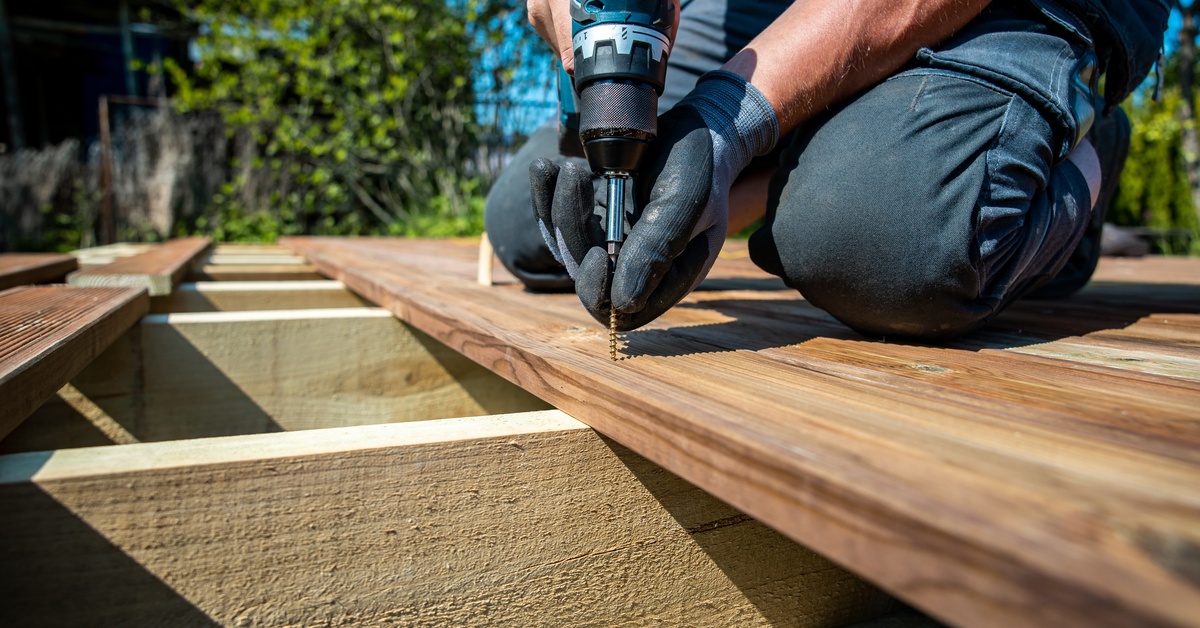
Decking boards are only part of a project’s true material bill. Framing underneath, the fixings that hold it together, and the finishes applied after the last board goes down each carry their own cost. A budget built on board prices alone will run out before the frame is finished.
Start with the three-tier split
A decking budget divides into three tiers: the boards, the substructure beneath them, and the hardware and finishes around both. The split works as a materials checklist. Price the decking boards, then the framing, footings, and structural hardware, then the fasteners, flashing, and sealants, so no tier goes uncounted.
Most under-budgeting starts with an online square-meter board price simply multiplied by the deck’s area. That figure settles in as the budget, and every later tier arrives as a surprise.
The practical tool is a material takeoff sheet, a line-by-line list of every member, fixing, and finish. Contractors build the budget from that list, and the list comes from the deck plan.
The same three-tier structure appears in contractor quotes, and homeowners comparing quotes can use it to check line items. Any quote without a hardware tier or a finishing tier won’t stay inside its original number.
Each tier has its own price drivers, and a change in one tier often moves another. A wider board, for example, changes both the board tier and the fixing count.
The substructure tier
The frame under the boards is priced by engineering requirements, and its variables sit in the ground and in the span tables. Posts, bearers, and joists each carry a stress grade, a treatment rating, and a spacing rule.
Footings and posts
Every post needs a support, and depending on the system that can mean excavation, concrete, and a metal stirrup, an in-ground post or a pedestal. Price the hardware the chosen system uses. Stirrups set in concrete hold posts clear of the soil, the first protection against rot and termite entry.
Sloped blocks and poor soil add excavation depth, machinery time, and extra material to that line. Framing timber must meet structural stress grades, and F7, MGP10, and F17 are the common ratings for this work.
Treated pine framing carries an H3 hazard rating for above-ground outdoor use, while H4 is rated for in-ground contact. Posts that enter the ground need the higher rating, and mixing the two up is a common ordering error.
Galvanized steel framing is the alternative, at a higher material price per meter. Steel offers greater span capacity and immunity to rot; pine costs less to buy.
Bearers and joists usually match the post material, and mixing materials changes both the tally and the fastener specification. Steel frames take different fixings than timber frames, so the fastener order should follow the frame decision.
Bearers, joists, and span tables
Span tables published in AS 1684 set the maximum distance bearers and joists can run between supports. Wider spacing reduces the number of posts and footings, while tighter spacing adds linear meters of every member.
A shift from one table row to the next can add or remove whole lengths of framing across the deck’s width. Joist spacing can also depend on the board profile and layout, so finalize the substructure tally once the board, layout and support system are chosen.
Ground clearance and drainage
Low ground clearance restricts airflow under a deck and can rule out standard posts and stirrups. Low-profile pedestal systems take their place, and they cost well above a basic footing.
Ventilation under the deck extends frame life, and clearance height is fixed early in the design. Poor drainage traps moisture against the frame, and correcting it adds excavation or drainage hardware before construction starts.
Pool-side decks sit in a permanent splash zone, so check the chosen board’s instructions for which faces, cut ends or edges need sealing. Each of these conditions is visible on a site inspection, and each belongs on the takeoff sheet as its own line.
Board prices need the right unit
Retailers quote decking boards per linear meter, and most project budgets are drawn per square meter. Converting between the two takes the board width plus the gap, because narrower profiles need more meters to cover the same area.
Treated pine sits at the bottom of the price range and accepts paint or stain. Merbau, also sold as kwila, is an imported hardwood whose high tannin content requires leaching or chemical preparation before finishing.
Leaching takes time, chemical treatment, or both, and either route adds cost before the first coat. Australian hardwoods such as Spotted Gum, Jarrah, and Blackbutt cost more, reflecting their density and durability.
Capped composite boards carry the highest upfront board price, with minimal coating expense over their service life. Composite pricing sometimes bundles starter clips or color-matched screws, so check what each board price includes.
Square-meter coverage folds width and gap into one figure and makes species-to-species comparison straightforward. Species choice also interacts with compliance, because fire-rated zones narrow the list before price enters the discussion.
One order, one freight bill
Regional climate conditions shape the tally list before it is sent to a supplier for pricing. Intense UV exposure shortens coating life on exposed decks, and termite pressure makes treated or resistant framing a standard specification in affected areas.
Consolidating framing, boards, and fixings into one tally list from a single regional specialist saves on freight and handling. A builder ordering through Decking Supplies Perth can place structural pine and finished boards on the same delivery.
A tally list sets out every member by length and grade, which lets the supplier pick stock lengths that match the plan. Standardized board lengths arrive needing less cutting, and the offcuts stay on the supplier’s rack.
Freight on timber is priced by volume and weight, so split orders repeat a cost that one consolidated delivery pays once. Timber delivered before the site is ready also needs dry storage, and a single scheduled drop avoids double handling. Delivery access matters as well, because long lengths need clear space for the truck and the unload.
Hardware and fixings
Fasteners are a small line item with a failure cost far above their price. For most inland decks, grade 304 stainless steel screws are the adequate specification.
Grade 316 marine-grade stainless is the specification for coastal sites, pool zones, and acidic timber species. On high-tannin species such as Merbau, the wrong metal reacts with the timber and leaves black staining around every fixing.
Corroded screws can also fail structurally, and fastener corrosion is a leading cause of deck repair work. Hidden clip systems, designed mainly for grooved composite boards, shift the fixing budget as well.
Clips cost more per fixing than screws, and installers report faster laying once the first row is set. Screw counts scale with deck area and board width, and boxes are sized to stated coverage rates.
Joist protection tape is the cheapest item in this tier, a butyl or bitumen flashing laid across the framing tops. It acts as a moisture barrier between board and joist and extends substructure life.
Premature framing rot is the expense these items prevent, and reaching a rotten joist means lifting the boards above it.
Board width, borders, and wastage
A 140mm board covers a square meter with fewer linear meters than a 90mm profile. The narrower profile needs more meters, more fixings, and more cuts to cover identical ground.
Picture-framed borders and 45-degree diagonal board layouts raise wastage rates well beyond a straight run. Estimators allow 10% to 15% extra material for cut-offs, grading defects, and pattern work, with complex layouts at the top of that range.
Diagonal runs can also tighten joist spacing, which pulls material back into the substructure tier. Breaker boards split a long deck into sections, and that single choice changes clip counts and the joist layout beneath.
Under-ordering by a single length can stall a deck for days, and that risk is what keeps the allowance in the tally.
Finishing costs arrive twice
Merbau’s tannins must be leached or stripped before coating, and that preparation is a first-day cost. Tannin strippers and wood brighteners are the products for the job, and per-meter board prices don’t show them.
New hardwood decks may also need weeks of weathering before some finishes will take, as product labels state. That delay pushes the first coating purchase past the build, where budgets often forget it.
Penetrating decking oils and water-based acrylic coatings behave differently across the years that follow the first coat. Oils need shorter re-application intervals on exposed decks, while acrylics offer longer film life but heavier preparation at failure.
Natural hardwood carries a recurring refinishing schedule across its service life, and each cycle repeats the preparation and coating expense. Composite boards skip that cycle, which offsets the higher board price.
Coverage rates vary by product, and labels state the area each container will treat. Rough-sawn boards absorb more product than dressed boards, and first coats use the most.
Between coats, cleaning products and light sanding add smaller recurring costs that repeat across the deck’s life.
Compliance has its own line items
Local building approvals add fees before any material is ordered, and large or elevated decks can require engineering certification as well. Approval timelines also affect ordering, because material bought early can sit through a long consent process.
Bushfire Attack Level ratings set material rules in designated zones, and a site’s rating can restrict species choice. The rating comes from a formal assessment, and material bought before that assessment can turn into wasted spend.
Site requirements in a designated zone depend on a professional project specification, which sets the materials a yard can supply for the job. Compliant hardwoods cost more per meter than standard pine.
An airtight budget is a tally: every framing member, fixing, and finish listed before the first order is placed. Choose the board and layout first, then price the frame they need, and carry the finishes across the deck’s service life. The takeoff sheet is where that starts, with the frame underneath.
